
Winterizing Your Ford: A 12-Point Checklist for Cold-Weather Reliability
A practical twelve-point winter checklist for Ford owners: battery testing, tire pressure and tread, cold-weather fluids, visibility, and a cab-stored emergency kit.
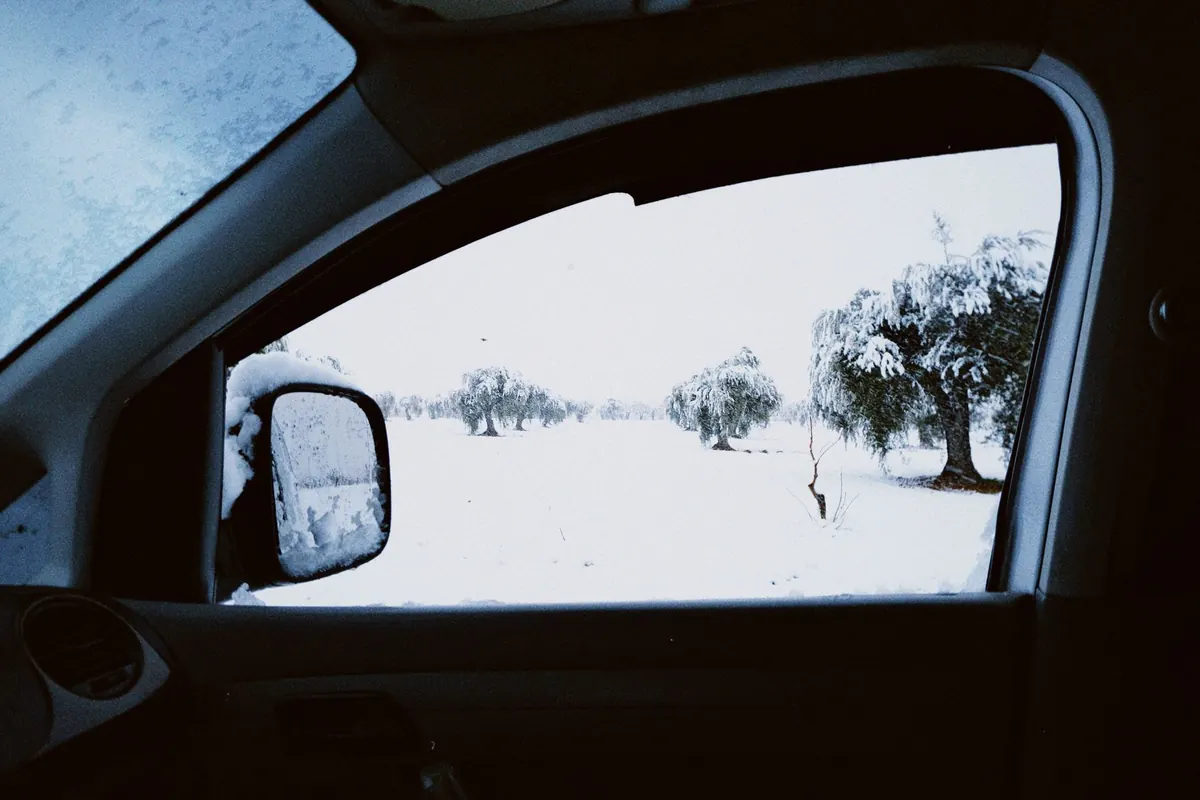
A cold snap rarely announces itself. One evening the forecast says 40 degrees; by morning the windshield is frosted, the door seals are stiff, and the engine turns over with a sound that makes you hold your breath. Most winter breakdowns aren't dramatic. They're a battery that finally quits, a tire that's six pounds low, or wipers that smear road salt instead of clearing it.
The good news: a Ford that's prepped for winter seldom surprises you. Set aside one afternoon in late fall, work through the points below, and you'll spend the cold months driving instead of standing in a parking lot waiting for a jump start.
Battery: The First Thing Cold Weather Attacks
Cold cuts a battery's available power while making the engine harder to crank, which is why so many no-start mornings happen in January. Start with age. Most batteries last three to five years, and if yours is older than that, it's already living on borrowed time.
Pop the hood and look at the terminals. Chalky white or greenish buildup is corrosion, and it blocks current. Disconnect the negative cable first, scrub the terminals with a wire brush and a paste of baking soda and water, rinse, dry, and reconnect. Make sure both cables are snug — a loose clamp can mimic a dead battery.
Then have the battery load tested. Many parts stores do this at no charge, and it takes minutes. A battery that reads fine at 70 degrees can fail a proper load test, which is exactly the information you want before the first hard freeze rather than after it.
If you replace the battery on a newer Ford, note that many models use a Battery Management System that needs to relearn the new battery's characteristics so charging strategy adjusts correctly. Your dealer or a shop with the right scan tool can reset it. Skipping this step is a common reason replacement batteries don't last as long as they should.
If your truck or SUV sits outside in serious cold, two accessories earn their keep: a block heater, if your vehicle is equipped with one, and a battery maintainer. A block heater on a timer for two or three hours before you leave is plenty. A maintainer keeps a parked vehicle's battery topped off between drives.
Tires: Pressure, Tread, and Honest Traction
Tire pressure falls as temperatures drop — roughly a pound per square inch for every 10 degrees. The 35 psi you set in October can read 29 by December, and that's before you account for normal seepage. Underinflation wears the shoulders, costs fuel, and reduces grip exactly when you need it. Check pressures when the tires are cold, and check the spare too; a compact spare loses air just as happily as the four on the ground.
Tread matters more than most drivers admit. Below about 5/32 of an inch, snow and slush evacuation drops off noticeably. A tread depth gauge costs a few dollars and removes the guesswork. If you regularly drive on ice and packed snow, dedicated winter tires are the single biggest handling improvement you can buy — bigger than any drivetrain upgrade.
On that note, all-terrain tires on an F-150 or Bronco help in deep snow and on loose ground, but they aren't the same as a rubber compound engineered for cold pavement. And remember the rule that four-wheel drive can't bend: it helps you accelerate, and it does nothing for braking.
If your tire pressure light comes on during the first cold morning, don't dismiss it. Verify with a gauge. If a tire is consistently low, you have a slow leak that cold weather simply exposed.
Fluids: Coolant, Oil, Washer Fluid, and the Ones You Forget
Check coolant level and strength. A proper 50/50 mix of coolant and distilled water protects well below freezing; a weak mix or plain water can freeze and crack an engine block. Top up with the coolant type listed in your owner's manual — mixing formulas can cause gelling and expensive problems. If the coolant looks rusty or the level keeps dropping, have the system pressure-tested before winter.
Oil thickens in the cold. If you run a heavier oil through summer, your owner's manual will list acceptable cold-weather viscosities, and a synthetic oil generally flows better on a single-digit morning. Getting this wrong doesn't strand you immediately, but it does mean slower lubrication on every cold start.
Washer fluid is the one people forget until they're staring through a salt-smeared windshield. Use fluid rated for the coldest temperatures you expect — 20 below or lower — and never dilute it with water. A frozen reservoir can crack, and running the pump against ice can burn it out.
Brake fluid absorbs moisture over time, and that matters more in freezing weather. If it's been years since yours was serviced, ask a shop to test it. While you're under the vehicle, glance at the transmission, differential, and transfer case for weeping seals. Winter doesn't cause leaks, but it punishes them.
Wipers, Glass, and Visibility
Streaking wipers plus road salt is a genuine safety problem, not a nuisance. Replace the blades before the season, or fit winter blades with a rubber boot that keeps ice from packing into the frame. Then refill the reservoir and check that the nozzles actually spray where you need them.
Never pour hot water on a frozen windshield. The thermal shock can crack the glass, and the water refreezes anyway. Use a scraper, the defroster, and a de-icing spray. Replace the cabin air filter so the defroster gets strong airflow — a clogged filter means foggy glass on the mornings you need clarity most.
Finally, treat the door seals. A light wipe of silicone spray or a dedicated rubber conditioner keeps doors from freezing shut, which is a far more common winter annoyance on modern vehicles than a frozen lock.
Belts, Hoses, and Rubber Nobody Checks
Cold makes rubber brittle. Squeeze the radiator and heater hoses — they should feel firm, not spongy, with no cracks or bulges. Inspect the serpentine belt for glazing and missing ribs. A squeal on cold start often points to a worn belt or a tired tensioner, and both are easier to replace in a warm garage than on the shoulder of a highway.
Build a Winter Kit That Lives in the Cab
The bed of a pickup is the worst place for an emergency kit: it gets buried under snow and freezes solid. Keep this in the cab or behind a seat.
- Portable jump starter, charged, and you already know how to use it
- Blanket, gloves, hat, and spare socks — the clothes you'd want if you stood outside for an hour
- Folding shovel, plus sand, kitty litter, or traction mats
- Long-handled ice scraper and snow brush
- Headlamp or flashlight with fresh batteries
- Phone cable and a charged power bank
- Reflective triangle or flares, and a tow strap
- Snacks and water in a container that won't burst when it freezes
- Basic first aid kit and any medication you might need
- Tire pressure gauge and warm work gloves
Never idle a vehicle in a closed garage, and avoid long idling in deep snow where exhaust can collect underneath. Carbon monoxide has no smell and no warning.
Your Order of Work Before the First Freeze
Do the battery and tires first, since those cause most winter failures. Then fluids, then visibility, then the kit. If you'd rather not crawl around in the cold, a dealer or trusted independent shop can perform a pre-winter inspection — the cost is modest next to a tow and a lost morning.
- Load-test the battery and replace it if it's weak.
- Clean and tighten the terminals; reset the Battery Management System after a replacement.
- Set tire pressures, including the spare.
- Measure tread depth and decide on winter tires.
- Verify coolant strength and level.
- Confirm your oil viscosity matches the owner's manual for cold starts.
- Fill the washer reservoir with fluid rated for your coldest temperatures.
- Replace wiper blades and the cabin air filter.
- Inspect belts and hoses for cracks or soft spots.
- Treat door seals with silicone and check the rear defroster.
- Build the winter kit and stow it in the cab.
- Test the block heater or set up a battery maintainer if the vehicle sits.
One habit worth changing: modern fuel-injected engines don't need long warm-up idles. Let the oil circulate for half a minute, then drive gently. You'll warm the whole vehicle faster — and you'll be on your way while everyone else is still scraping.
Photo: Efnan Yılmaz / Pexels