


Ford F-250 Super Duty Towing Checklist for First-Time Trailer Owners
A practical pre-tow checklist for first-time F-250 owners covering payload and tongue weight limits, hitch setup, brake controller tuning, tire pressure, mirrors, and the walk-around.
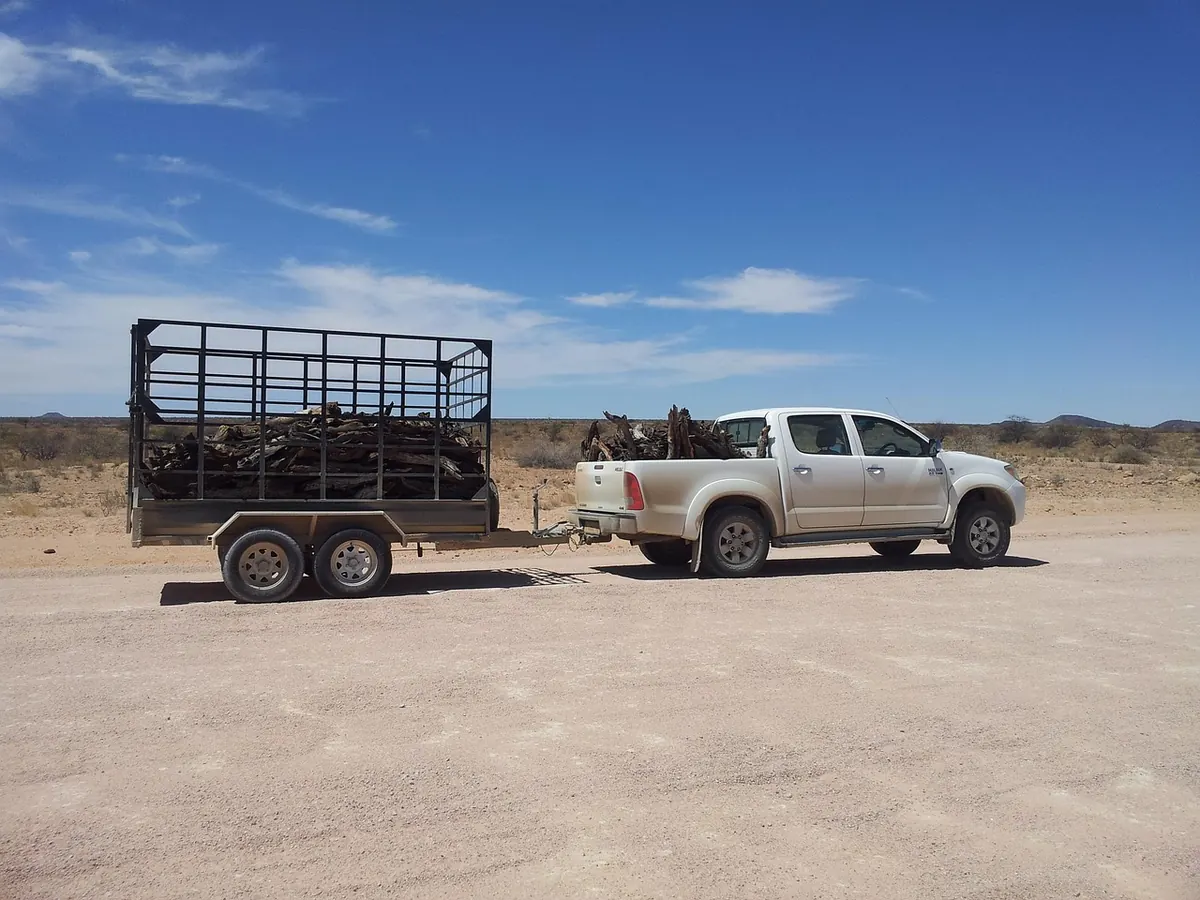
Hooking a trailer to an F-250 for the first time feels bigger than it looks. Seven thousand pounds behind a Super Duty barely registers in the seat of your pants, and that is exactly the trap. A three-quarter-ton truck is capable enough to make a badly loaded trailer feel normal right up until the moment it doesn't. What follows is the checklist worth running every time you hitch up, not just the first time. It takes about fifteen minutes.
Know Your Numbers Before You Touch the Hitch
Open the driver's door and find the stickers on the jamb. They give you the payload rating for your specific truck, along with gross vehicle weight rating and axle ratings. The number that matters most is payload, because everything you add to the truck comes out of it: passengers, tools, firewood, the hitch hardware itself, and the tongue weight of the trailer.
Payload is also why two F-250s with the same engine can have very different limits. A crew cab 4x4 with a diesel and a loaded trim package gives up real capacity compared to a base regular cab. Use your truck's sticker, not a brochure.
Tongue weight for a conventional trailer should land between 10 and 15 percent of the loaded trailer weight. A 7,000-pound trailer wants roughly 700 to 1,000 pounds on the ball, and that comes straight off your payload. A fifth-wheel or gooseneck runs higher, typically 15 to 25 percent, and the hitch assembly in the bed takes another bite before the trailer is even connected. If you want real numbers instead of estimates, one stop at a CAT scale gives you front axle, rear axle, and trailer axle weights with the rig loaded the way you plan to travel.
Hitch Setup: Height, Ball Size, and Latch
Match the ball to the coupler before anything else. A 2-inch ball will drop into a 2-5/16-inch coupler and seem fine — until the trailer shifts under braking. Check the coupler stamp, then check the ball. They have to match.
Set ball height so the trailer sits level or slightly nose-down. Measure coupler height with the trailer on flat ground, then adjust your ball mount or adjustable shank to match.
Latch the coupler, close the handle, and install the safety pin or clip. Then raise the tongue jack with the trailer still coupled. If the back of the truck comes up with it, the coupler is seated. Cross the safety chains under the tongue in an X so the tongue is caught if it ever comes loose, and attach the breakaway cable to a solid point on the truck rather than to the same loop as the chains.
Read the label on your receiver. It lists separate limits for weight-carrying and weight-distributing setups. If your loaded tongue weight exceeds the weight-carrying figure, you need a weight-distributing hitch, and the spring bars should be tensioned so the truck sits close to its unloaded rake.
The Brake Controller: Set It, Then Prove It
An F-250 with the tow package has the integrated trailer brake controller built into the dash, and it only does anything if the trailer has electric brakes. Set the gain, then verify it.
On a quiet road or empty lot, drive about 20 mph and squeeze the manual lever on the controller all the way. The trailer brakes should come on firmly and slow the rig without locking the trailer wheels. If the wheels lock or chirp, lower the gain. If you feel almost nothing, raise it. The right number changes with load, so a setting that worked with an empty trailer may be too low with a full one.
Run that test before every trip, not just the first. It takes thirty seconds and confirms the wiring is still good — a failure you cannot see from the driver's seat.
Truck Tires and Trailer Tires Are Two Different Jobs
For the truck, use the pressures on the door jamb sticker, which often lists a separate set for heavy loads. That is the number to run when towing, not the maximum pressure molded on the sidewall.
Trailer tires are generally inflated to the maximum pressure shown on their sidewall, checked cold. They also age out long before they wear out. Look at the DOT date code — four digits, week and year — and check for cracks, bulges, or cupping.
- Carry a spare for the trailer, not just the truck, and a lug wrench that fits the trailer's lug nuts. They are frequently a different size than the truck's.
- Check trailer lug nut torque before you leave and again after the first 25 to 50 miles.
- Note the load range on the trailer tires. Replacing a load range E with a cheaper C is a downgrade you will feel on a hot day.
Mirrors, Lights, and the Walk-Around
Super Duty tow mirrors telescope outward. Pull them out and angle them so a narrow strip of the trailer's side is visible in each mirror, with the lane beside it filling the rest. If the trailer fills the whole mirror, you cannot see what is next to you.
Then walk the rig once, in the same order every time:
- Coupler latched, safety pin in, chains crossed, breakaway cable attached.
- All lights working: running, brake, both turn signals, and marker lights.
- Tongue jack raised and pinned, chocks and stabilizer jacks stowed.
- Trailer doors, ramp latches, and tailgates closed and locked.
- Load secured, heavy items over the axles and slightly forward of them.
- Nothing loose in the bed that can slide into the cab under braking.
The First Ten Miles
Pull forward twenty feet, stop, and do the walk-around again. Then drive a few miles at a modest pace, make some gentle stops, and pull over at the first safe spot to check the hitch, chains, lug nuts, and load.
Turn on tow/haul mode. It changes shift points and adds engine braking, and on a diesel the exhaust brake earns its keep on descents. Leave more following distance than feels necessary, plan fuel stops where you can pull through instead of backing out, and practice backing in an empty lot before you have an audience.
If the trailer starts to sway, do not steer against it. Ease off the throttle and squeeze the manual trailer brake lever to pull the rig straight, then stop and check your load distribution.
Make It a Routine
None of this is complicated, and none of it takes long once you have done it a handful of times. The value is in the repetition: the same numbers checked, the same walk-around, the same brake test, every trip. Trailers rarely fail politely, and the fifteen minutes before you pull out is the cheapest insurance you will ever buy.
Photo: garygee / Pixabay